Lesson 6 — The Physics of Vision: Why the Eye Loves Contrast
Photography is not just about light entering a camera—it’s about how the eye and brain interpret that light. When you understand the physics of vision in photography, you understand why certain images feel immediately compelling while others fall flat.
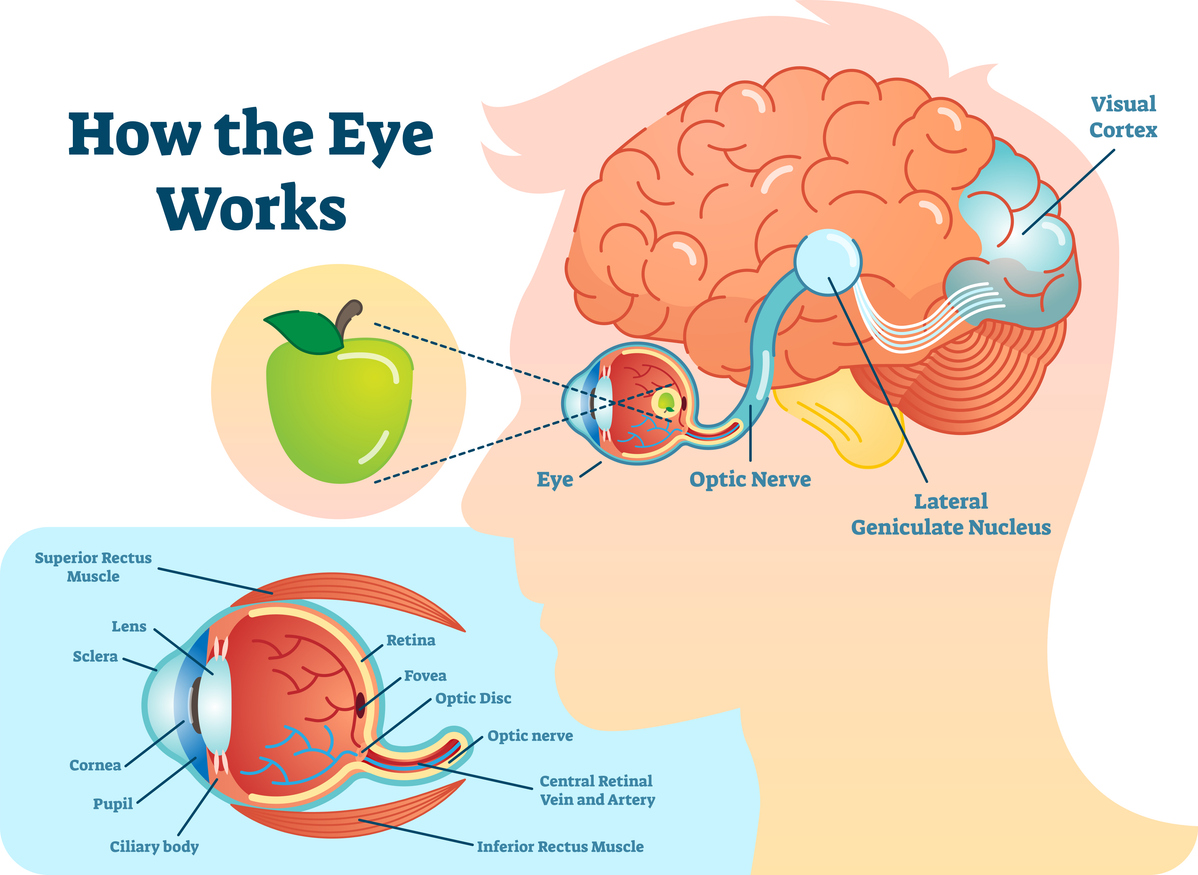
Learning Objectives
- Understand how the eye detects contrast and why contrast drives visual attention.
- Explain the functions of rods, cones, and the fovea in photographic perception.
- Recognize how brightness adaptation shapes exposure decisions.
- Apply principles of human perception to create stronger images.
1) Vision Begins with Contrast
The human eye is remarkably sensitive—not to absolute brightness, but to differences in brightness.
2) The Fovea — Where Photographic Sharpness Lives
Photographers must direct the viewer’s fovea. Composition and local contrast become tools of guidance.
3) Rods, Cones, and Brightness Adaptation
Exposure strategy bridges what biology adapts to—and what cameras record literally.
4) The Brain Edits Reality Before You See It
Color normalization, edge enhancement, and brightness correction happen automatically in perception.
5) Practical Implications for Photographers
Use contrast to guide attention; control edges; balance competing contrasts to avoid noise.
Hands-On: Contrast Walk
- Photograph five scenes driven by different contrast types.
- Crop to emphasize the strongest perceptual cue.
- Note what drew your eye first.
Quick Check
- Why does the eye prioritize contrast?
- What role does the fovea play in attention?
- How do rods and cones influence exposure decisions?
Glossary
- Fovea
- The retinal region responsible for sharp, color-rich vision.
- Contrast Sensitivity
- The ability to detect brightness differences.
- Brightness Adaptation
- Visual system adjustment to light changes.
- Rods and Cones
- Photoreceptors for low-light and color vision.
- Visual Cortex
- Brain region interpreting visual signals.
Continue in Learn → View all Learn lessons
Jump to: Learn • Envision • Create
References
- Britannica — Human eye
- Associated blog(s): Learn — Lesson 5: What Is Light? The Photographer’s Raw Material
- Associated blog(s): Envision — The Creative Eye: Seeing as an Act of Being