Lesson 45 — The Meditative Frame: Slowing Down Before You Press the Shutter
Meditative photography begins when the photographer gives attention enough time to deepen before deciding what deserves a frame.
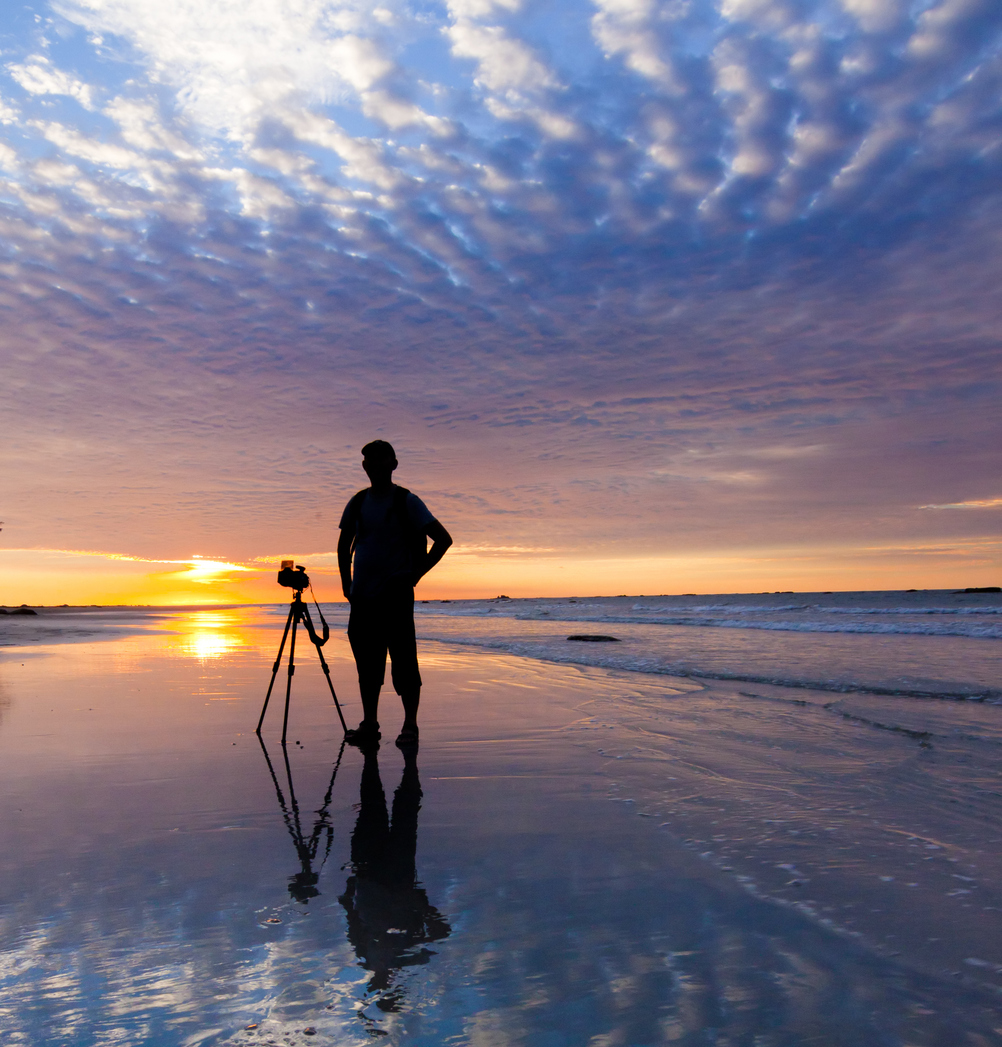
1) Meditative Photography Begins Before the Camera Rises
Photography can become surprisingly fast. We see something interesting, raise the camera, make several frames, check the screen, and move on.
Sometimes speed is necessary. A gesture, expression, animal, or changing light may disappear almost immediately. Yet many photographic situations offer more time than we allow ourselves to use.
Meditative photography begins by resisting the assumption that seeing must immediately become shooting. Instead, the photographer allows observation to come first.
2) Slow Photography Is About Attention, Not Shutter Speed
A slow photograph is not necessarily made with a long exposure. It may be captured at 1/1000 second.
The slowness occurs before the shutter opens. The photographer watches, waits, compares possibilities, changes position, notices relationships, and allows the scene to become more fully understood.
Therefore, slow photography describes a pace of attention rather than a camera setting.
3) Looking Longer Changes What You Notice
First impressions are useful, but they are incomplete.
When you remain with a scene, secondary relationships begin to appear. A shadow aligns with an edge. A repeated shape becomes noticeable. Light moves across a surface. A distracting element disappears when the wind shifts. A person enters precisely the part of the frame that had previously felt empty.
Consequently, time does not merely give the photographer more opportunities. It can change the photographer’s understanding of the composition.
4) Observe Before You Frame
One useful practice is to delay raising the camera.
Stand in front of the subject and simply look. Notice where your eye travels first. Then notice what competes for attention. Consider the light, edges, background, color relationships, negative space, and movement within the scene.
Only after that observation should the camera enter the process. By then, framing becomes a response to what you have noticed rather than an attempt to discover the photograph through repeated exposures.
5) Contemplative Photography Uses Fewer, More Deliberate Frames
Digital photography makes abundance effortless. There is little technical penalty for making dozens of nearly identical exposures.
However, unlimited shooting can sometimes substitute repetition for decision. The photographer keeps pressing the shutter because choosing the exact moment has become less important.
Contemplative photography does not require an artificially low frame count, but it encourages greater intention. Each exposure should answer a reason: the light changed, the gesture improved, the relationship strengthened, or the composition became more complete.
6) Waiting Allows Relationships to Settle
Some compositions are not ready when you first encounter them.
Clouds move. People enter and leave. Reflections change. Wind alters foliage. Shadows shift. Even within a static landscape, the balance among these elements can change from minute to minute.
Instead of immediately seeking another subject, consider staying. Often the scene does not need a different photographer; it simply needs more time.
7) Mindful Photography Includes the Edges
Slower attention also improves awareness of the entire frame.
Photographers naturally concentrate on the primary subject. Meanwhile, small distractions accumulate near the edges: a bright branch, partial object, awkward overlap, clipped shape, or unnecessary patch of sky.
Mindful photography asks the photographer to inspect not only the subject but everything that has been allowed into the composition.
Before pressing the shutter, move your attention deliberately around all four edges and corners. This brief habit can eliminate many distractions before post-processing ever becomes necessary.
8) Slowing Down Strengthens Intuition
Slowness and intuition may seem contradictory. Intuition feels immediate, while contemplation appears deliberate.
In practice, they reinforce each other. The longer you observe, the more visual information becomes available to your instinctive judgment. You begin to sense when a composition feels unresolved and when it suddenly settles into place.
Eventually, deliberate observation and intuitive recognition begin to merge. You are no longer analyzing every relationship consciously, yet your eye has been trained by the time you have spent looking.
9) Meditative Photography Creates Space for Presence
Slowing down changes more than composition. It changes the photographer’s relationship with the experience itself.
When attention is not constantly interrupted by reviewing images, changing settings, or searching for the next subject, the photographer becomes more present within the scene. Sound, movement, weather, light, and spatial relationships become easier to notice.
Ultimately, meditative photography asks for a simple exchange: fewer hurried reactions in return for deeper seeing.
The shutter may still open for only a fraction of a second. The act of attention that precedes it can last much longer.
Hands-On Practice: The Five-Minute Frame
- Choose one subject or scene and commit to remaining with it for at least five minutes.
- For the first minute, do not raise the camera. Simply observe the scene.
- Notice the whole frame. Study the subject, background, edges, light, color, movement, and negative space.
- Change your position before changing subjects. Move closer, farther away, higher, lower, left, and right.
- Wait for one meaningful change in light, gesture, movement, or relationship before making another frame.
- Review only after the exercise is finished. Compare the photographs and determine whether later frames show evidence of deeper observation.
Quick Check
- Did I observe before raising the camera?
- Have I inspected all four edges of the frame?
- Am I making another exposure because something changed—or simply because I can?
- Would waiting improve the relationship among the elements?
- Have I changed viewpoint before abandoning the subject?
- Am I paying attention to the experience as well as the resulting photograph?
- Does the final image reflect deeper seeing rather than faster shooting?
Glossary
- Meditative photography
- A photographic approach emphasizing sustained observation, deliberate attention, and thoughtful timing before exposure.
- Slow photography
- A practice that prioritizes careful observation and intentional image-making rather than rapid or excessive shooting.
- Contemplative photography
- An approach in which sustained looking and awareness guide photographic choices.
- Mindful photography
- The deliberate awareness of subject, frame, surroundings, and one’s own attention while making photographs.
- Visual attention
- The selective process by which the eye notices, prioritizes, and interprets elements within a scene.
Continue in Learn →
References
- External reference:
-
External reference:
The Metropolitan Museum of Art — Germaine Krull, Café, Paris
- Associated blog:
- Associated blog: